Pierluigi Paganini
 November 23, 2026

Spain’s National Police arrested a man in Burgos last Tuesday, calling him the main instigator behind what would have been NoName057(16)’s first physical cell in the country.
“The arrested man carried out propaganda, glorification and recruitment activities in favor of NoName057(16), and disseminated calls on social networks to cyberattack state institutions and confront the police.” reads the announcement published by the Spanish Police.
“This group claimed that the propaganda campaign it carried out in eight locations in Castile and León, Aragon, La Rioja and Madrid was the work of “its volunteers”.”
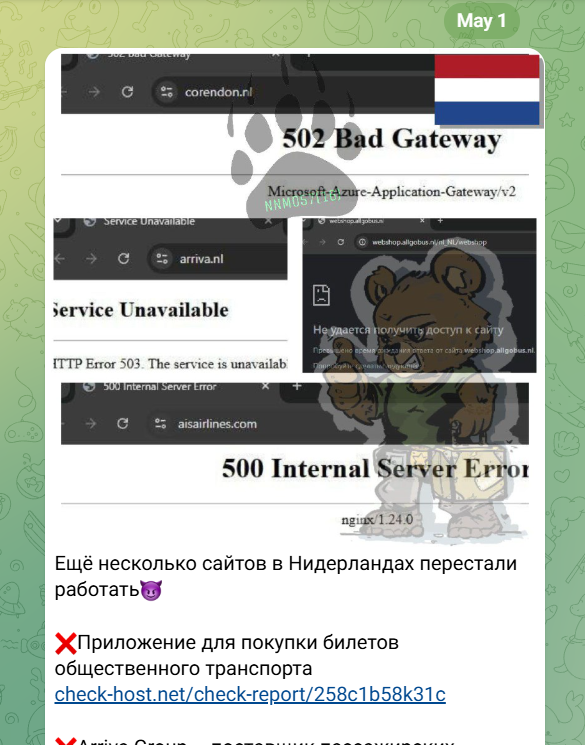
Until now, the pro-Russian group’s operations had been limited to cyberattacks. Spanish police say the arrest stopped plans to start violent activities. The suspect is being held on charges of belonging to a cyberterrorist organization and promoting terrorism.
“His arrest has thus far thwarted the start of violent attacks. This organization is believed to be responsible for at least 447 cyberattacks in Spain since 2014 against institutions, banks, and transport companies.” continues the announcement. “The arrested individual carried out propaganda, glorification, and recruitment activities on behalf of NoName057(16), and disseminated calls on social media to cyberattack state institutions or confront the police. He also acted as an intermediary for recruiting new supporters and referred interested parties to a recruitment system linked to NoName057(16). “
A search of his home uncovered much more than computer equipment. Police seized a semi-automatic rifle with a folding stock, several carbines and shotguns, high-capacity magazines, and more than 5,000 rounds of ammunition, including military-grade ammunition. Officers also found homemade clubs fitted with screws, double-edged detachable spears, brass knuckles, illegal pepper spray, chemical containers, and ten canisters of butanol. The discovery suggests that the suspect may have been preparing for activities beyond cyberattacks.
“The arrested man progressed from participating in online conspiracy groups to actively engaging in a channel where he promoted and glorified the group’s actions.” continues the report. “Last year, he distributed stickers bearing the organization’s emblem and QR codes that linked to its official channels in Burgos, Palencia, Lerma, Valladolid, Zaragoza, Logroño, Aranda de Duero, and Madrid.”
NoName057(16) isn’t a new name to Spanish authorities. The group has claimed at least 447 cyberattacks in the country since 2024, hitting institutions, banks, and transport companies. It formed in March 2022, shortly after Russia invaded Ukraine, with NATO members, the EU, and other Western allies as its stated targets.
The arrested man wasn’t directly involved in carrying out cyberattacks. Instead, he used social media to encourage attacks against government institutions and calls for confrontations with police. He also helped recruit new members by directing interested people to the group’s official recruitment system. In addition, he spread the group’s propaganda in eight locations across Castile and León, Aragon, La Rioja, and Madrid, handing out stickers with its logo and QR codes linking to its online channels.
Investigators say he gradually moved from following online conspiracy groups to running his own channel, where he praised the group’s activities. A court released him under certain conditions while the investigation continues. Police also found three physical cryptocurrency wallets containing bitcoin and are still investigating the origin of the funds.
The timing isn’t a coincidence on the political side either. On 16 November, the Council of the European Union sanctioned NoName057(16) under its cyberattack sanctions regime, freezing its funds and banning anyone from making resources available to it. A government can freeze an accounts and still not stop someone from stockpiling ammunition in Burgos, which is exactly the gap this arrest closes.
The case also lands days after Spanish courts ordered a full shutdown of the neo-Nazi group National Nucleus, sealing its headquarters in Burgos, Valladolid, and Madrid. Two unrelated extremist networks, one city, two closures in the same week. For a hacktivist group whose previous reach never left a browser tab, this represents the organization’s “first consolidated physical presence” in Spain.
Follow me on Twitter: @securityaffairs and Facebook and Mastodon
(SecurityAffairs – hacking, newsletter)
 Pierluigi Paganini
November 22, 2026