Pierluigi Paganini
 November 19, 2026

Security researcher Chaotic Eclipse, also known as INFINITE NIGHTMARE, MSNightmare and Nightmare-Eclipse, released a new Windows zero-day vulnerability, dubbed FastUnlock, exploiting Narrator to bypass the lock screen.
According to the researcher, exploiting it can bypass BitLocker encryption and allow code execution under the lock screen’s WsiAccount. He claims he breached a fully encrypted Windows 11 26H2 system in just five minutes, even with the November security updates installed.
“It took a total of 5 minutes from finding this to breaching a fully encrypted bitlocker machine with Windows 11 26H2 November Patch installed, an issue caused by total negligence from Microsoft’s side… The vulnerability seems to be extremely consistent in every machine I tested it in, in other words, if you know how to control narrator in the background properly or just press the correct combination of buttons, you will get code execution in the target machine as well.” reads the advisory published by the researcher.
The attack requires physical access to the computer and at least one user account linked to an online account. The researcher says the flaw undermines BitLocker’s protection, which should prevent access to encrypted data even if an attacker has physical access to the device.
He explains that Microsoft introduced the issue while redesigning Narrator, failing to prevent its new interface from running in the lock screen account context. Unlike earlier lock screen bypass flaws, this one is reportedly easier to exploit. The attack can be triggered through the “I forgot my PIN” or password option.
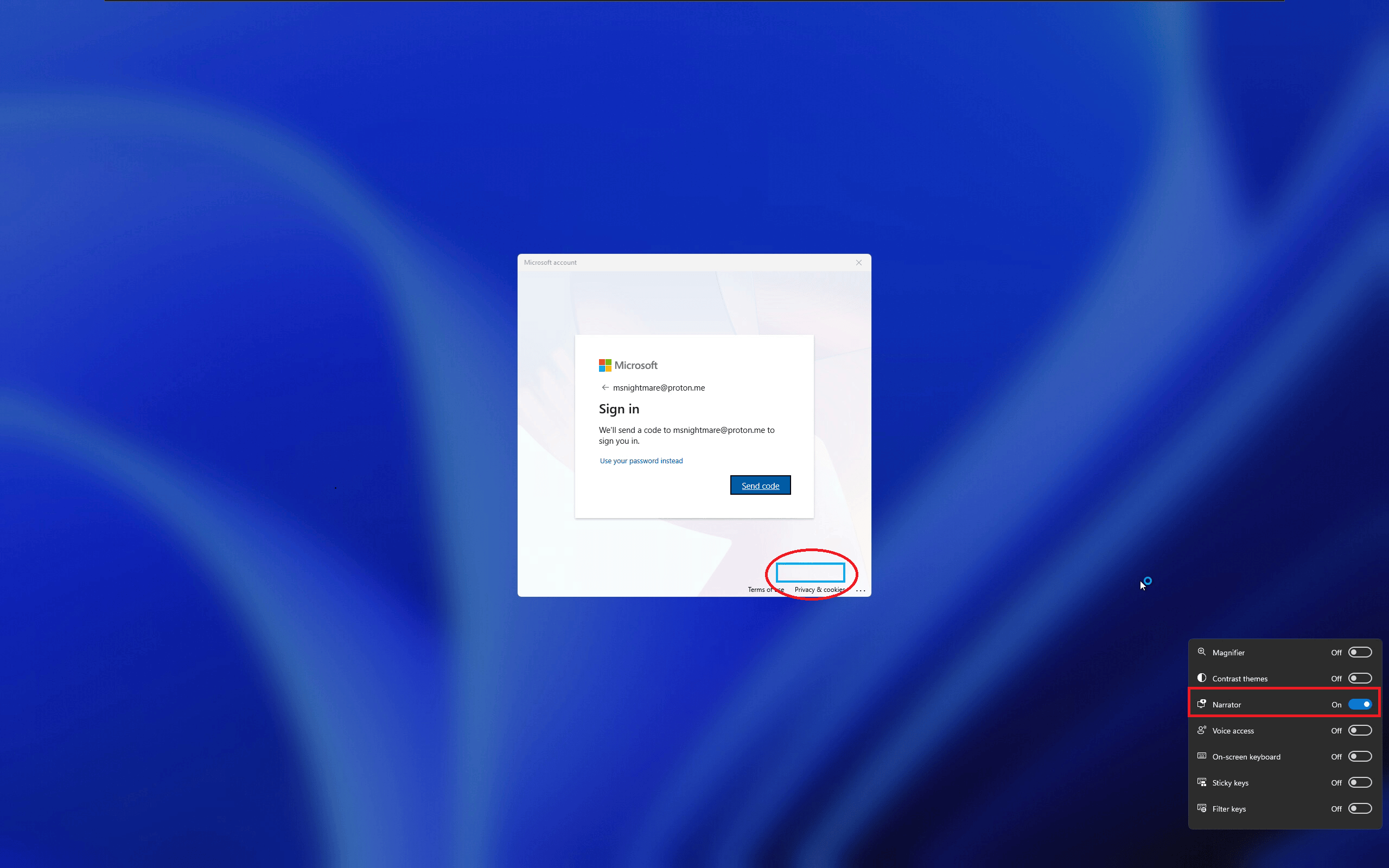
The researcher explains that the attack starts from the Microsoft account recovery screen. Enabling Narrator causes it to focus on a hidden background window. By navigating its options with the keyboard, an attacker can open Narrator’s settings. From there, the researcher says several paths can lead to code execution under the WsiAccount user, including opening File Explorer through the Bluetooth and Devices and AutoPlay settings.
“Now I didn’t show the full code execution demo because I don’t really have a USB stick but I already did this enough times to know what happens next, your next step is to plugin a USB stick, as soon as you do, narrator will focus on explorer showing your mounted storage content and you can just navigate with the same button combination (CAPS LOCK + Arrow keys/Enter/Space), if you do everything properly the binary in your USB stick will be executed in the context of “WsiAccount”” concludes the report. “I have not checked other windows versions so I am not really sure if this might work on windows 10.”
Chaotic Eclipse is a researcher known for publicly releasing PoC exploits for zero-day vulnerabilities, often after criticizing vendors’ handling of vulnerability reports. His releases have mainly targeted Microsoft products, including Windows and Microsoft Defender, with some later exploited in the wild. Among the most notable are the Undefend and RedSun Defender zero-days.
His work has fueled debate over responsible disclosure and the risks of publishing working exploits.
Recently, Chaotic Eclipse revealed that he is Abdelhamid Naceri, a security researcher. Naceri previously worked with Microsoft in the UK and Germany. In a now-deleted X post, he described his departure from the company, claiming Microsoft terminated his employment without giving him a clear reason. He said Microsoft offered several financial settlements, but he rejected them because he wanted a formal explanation and help staying in Germany.
Naceri also said he challenged the dismissal in a German labor court. According to his account, Microsoft changed its arguments during the case, but the court ultimately upheld the termination. He said the long legal dispute left him with almost no compensation and caused serious financial and emotional problems, including treatment in a psychiatric hospital.
The researcher also admitted that an earlier claim that Microsoft had taken legal action against him was fabricated. The claim came during the controversy over Microsoft’s threats of legal action against security researchers who disclosed zero-day vulnerabilities.
In September, the researcher released a new zero-day exploit targeting Microsoft Defender. He named the exploit BigDiskBuster, it triggers a Denial of Service Vulnerability in Windows Defender Update.
In the same month, Chaotic Eclipse released multiple zero-day exploits targeting Nvidia (GreenSection) and Microsoft Defender (ShieldCrash).
He also released exploits targeting other anti-malware and defense solutions. Chaotic Eclipse released a zero-day exploit targeting Kaspersky Endpoint Security, which he named HardBreacher, that triggers a privilege escalation flaw. The researcher pointed out that the PoC is unstable and may require repeated attempts, but when successful, it creates a DLL in System32 with full user permissions. The researcher also claims that taking control of Kaspersky’s UI process can disrupt the antivirus and interfere with file-access controls, potentially leaving the system in an unstable state.
The researcher also released a zero-day exploit targeting GenDigital Avast Antivirus, named PrettyPrague. The exploit triggers a privilege escalation flaw.
Finally, Chaotic Eclipse released a new zero-day exploit targeting Crowdstrike Falcon cybersecurity platform. The researcher named the exploit FalconFlank, it triggers a privilege escalation flaw.
Follow me on Twitter: @securityaffairs and Facebook and Mastodon
(SecurityAffairs – hacking, Chaotic Eclipse)