Pierluigi Paganini
 October 12, 2026

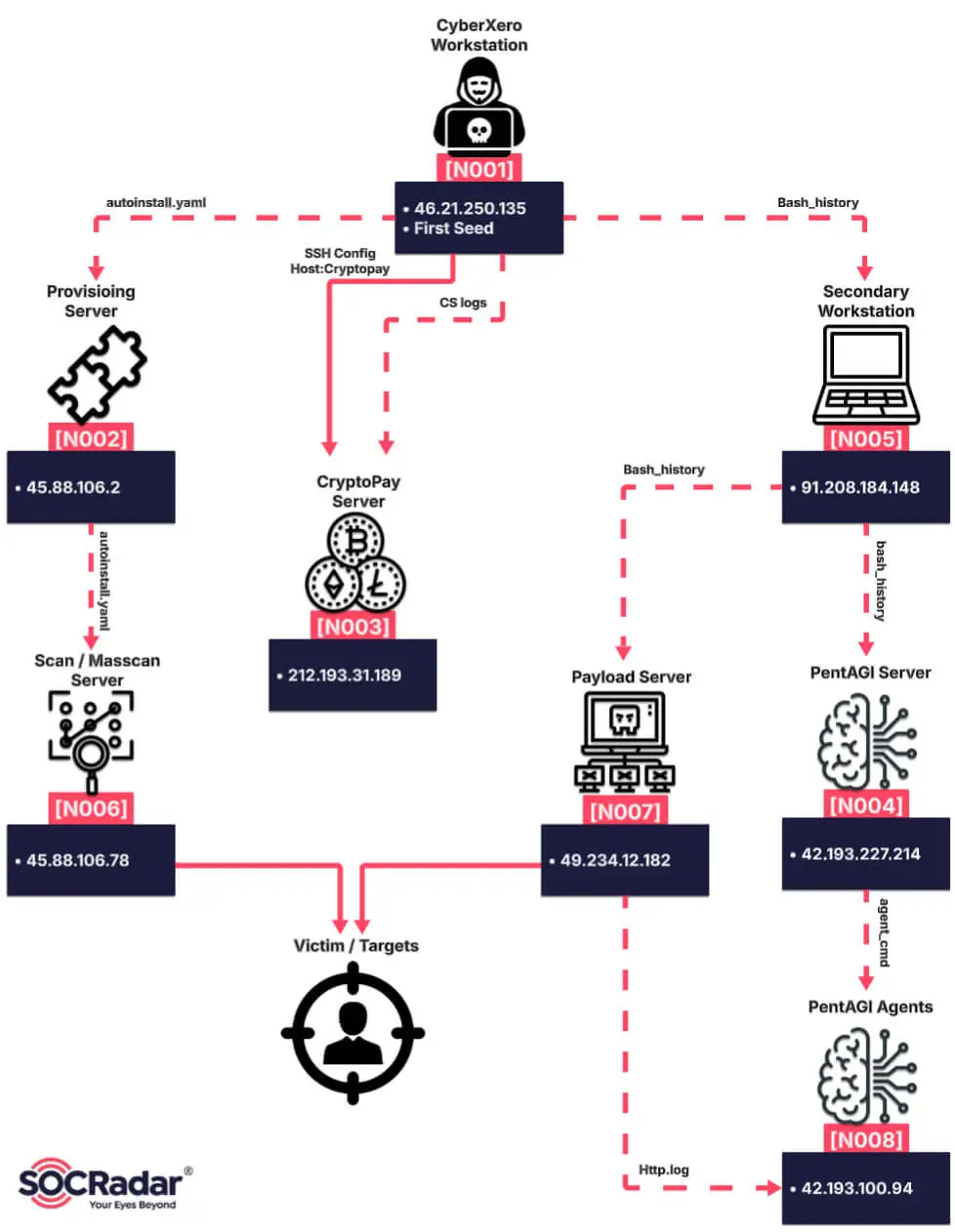
CyberXero is an operation that combines traditional hacking tools with AI agents to carry out cyberattacks. According to SOCRadar researchers, the attackers use the same infrastructure for two different campaigns: one targets WordPress websites and e-commerce platforms worldwide, while the other focuses on Ukrainian energy and critical infrastructure.
The actor behind CyberXero is a Russian-speaking, financially motivated threat actor. This type of attacker, known as an initial access broker, breaks into networks and sells access to other criminals instead of using it directly. One campaign focuses on attacking as many targets as possible, while the other involves carefully selected targets in Ukraine.
“SOCRadar’s Threat Research Unit (STRU) has documented CyberXero, a Russian-speaking, financially motivated Initial Access Broker that pairs commodity offensive tooling with an AI orchestration layer running on its own infrastructure.” reads the report published by SOCRadar. “The operation runs two pipelines at once: a global, automated campaign against WordPress and e-commerce platforms, and a curated, manual campaign against Ukrainian energy and critical infrastructure. More than 628,000 Ukrainian individuals have confirmed data in the actor’s possession, including residents of Kharkiv, a city on an active war front.”
The investigation only happened because the threat actor made one classic mistake, an open directory with zero access control sitting on a server. That single misconfiguration exposed the actor’s entire working directory, more than 90,000 files, including AI session logs, scripts with plaintext tokens, and already-stolen victim data. The exposed server was found at “46.21.250[.]135,” hosting a live Linux workstation’s complete contents.
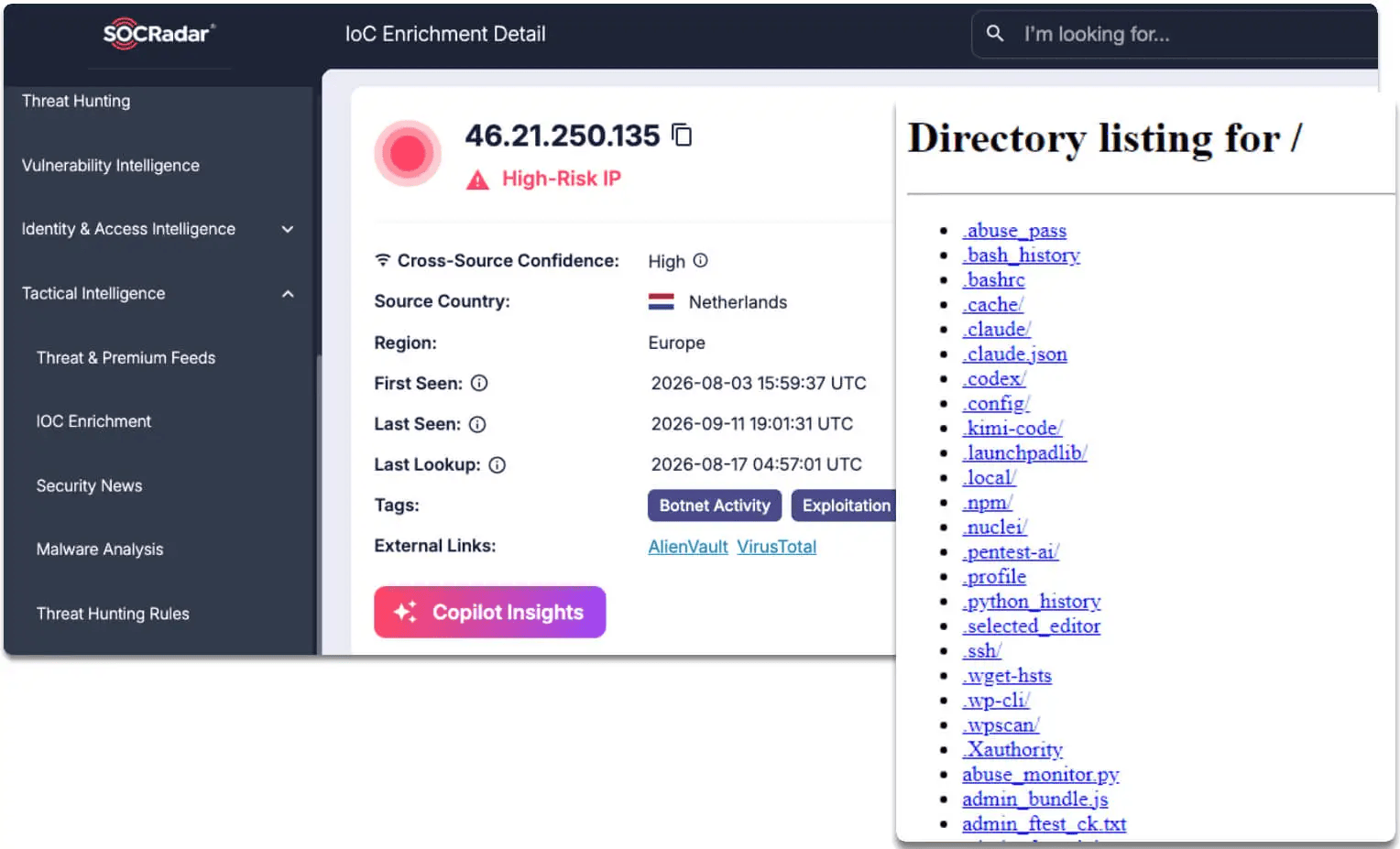
Session logs recording every planned target, every refused task, and every workaround attempt are, in practice, the offensive equivalent of a keylogger running against the attacker’s own operation.
The global pipeline runs on a custom tool called wp2shell, which abuses a flaw in the WordPress REST API to inject SQL, plant a rogue admin account, and drop a webshell. The scale is genuinely industrial. A single automated run scanned 4,708 targets, confirmed access to 429 WordPress admin panels, and deployed 32 webshells, all within 61 seconds.
That’s not a person clicking through targets one at a time, that’s infrastructure built to move at machine speed. The target list for this side of the operation exceeds 56,000 identified URLs, spanning e-commerce platforms and WordPress sites with no particular country or sector pattern.
The second campaign is more targeted. The attacker manually selected targets in Ukraine, focusing on energy and utility companies, including the country’s national electricity transmission operator. Researchers confirmed data theft from four Ukrainian organizations. One of the most serious cases involved a district heating provider in Kharkiv, a city close to the front line.
A password stored directly in the attacker’s script gave access to the provider’s systems. An automated tool then extracted more than 564,000 customer records, including home addresses and account numbers. SOCRadar warns that this data could put people at physical risk because Kharkiv is in an active war zone. Stolen customer information is usually a privacy concern, but in this situation, linking real names to home addresses could create much more serious dangers.
“Because Kharkiv sits on an active conflict front, this dataset poses a potential physical risk to identifiable civilians that goes well beyond a conventional data breach.” continues the report. “The most elaborate chain, against an e-commerce portal, combined blind SQL injection, a time-constrained password-reset token extraction, and PHP deserialization to reach remote code execution and full database access.”
The attacks stand out from typical cyber operations because the actor ran up to 51 specialized Claude Code agents on the primary workstation, assigned to roles like exploit chaining, lateral movement, and reconnaissance, plus a separate AI pentesting framework wired directly into a Cobalt Strike command server. SOCRadar’s researchers found the actor had also built a reusable script to get around model safety refusals, framing every request as an authorized penetration test on infrastructure the actor supposedly owned.
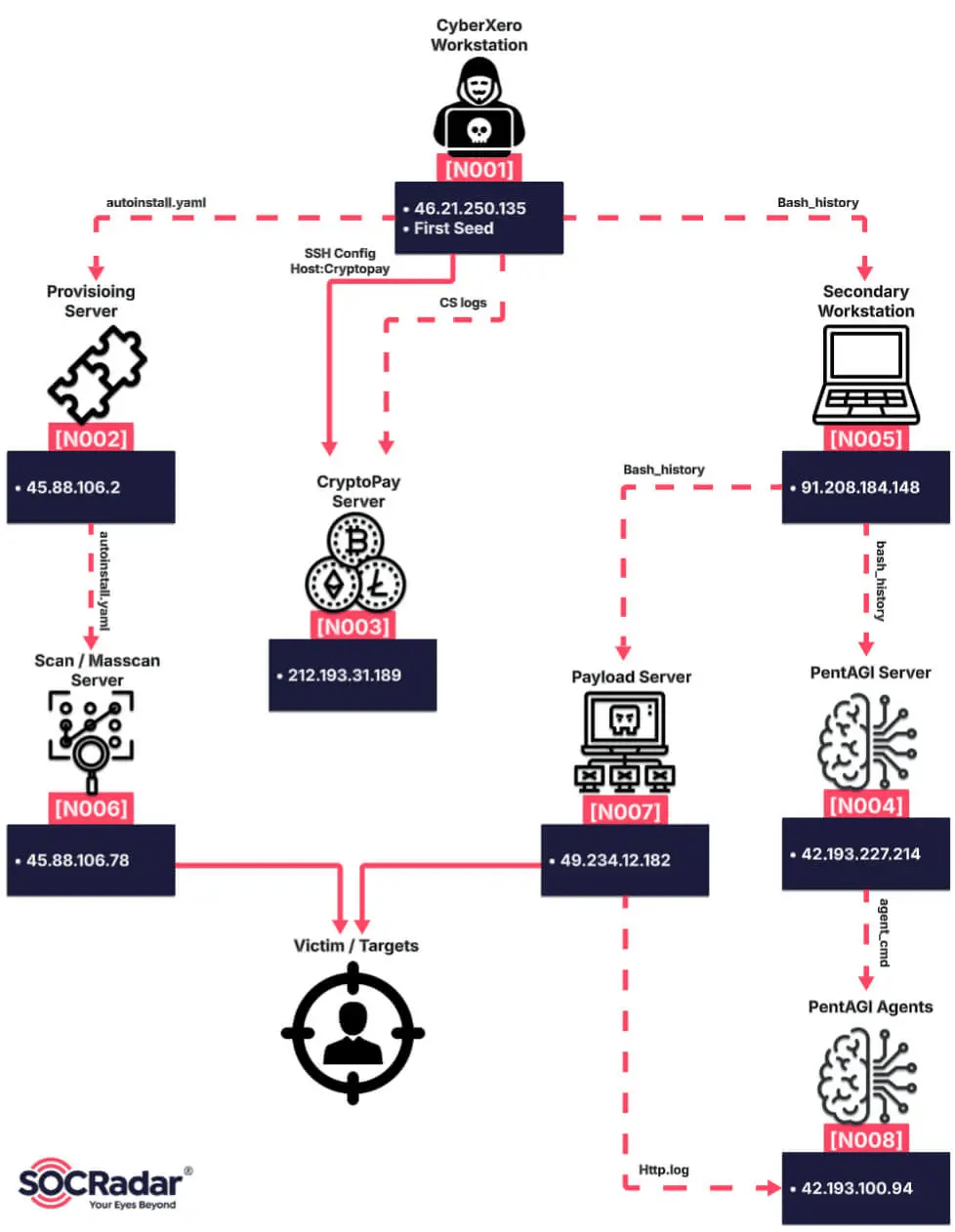
That trick isn’t a technical bypass, it’s social engineering aimed at the model instead of a person. And it didn’t always work. The logs show the model declining real requests multiple times, including four separate refusals to install a backdoor, disable a firewall, move laterally, or deploy a webshell. Safety measures held in plenty of individual sessions. The actor’s workaround was just opening a new session each time, since a refusal doesn’t carry forward once the context resets.
Researchers identified the operator by combining several clues: a paid AI subscription linked to a personal email address, a forum post using the same online alias, and activity that consistently matched Moscow time. The campaign affected more than 40 organizations across Ukraine, Poland, China and Pakistan.
The main lesson for defenders is to protect AI agent session logs as carefully as passwords and other sensitive credentials. These logs can reveal an attacker’s plans, the systems they accessed, what worked and where their attempts failed. If exposed, they can provide a detailed picture of the entire operation.
The report includes Indicators of Compromise (IoCs) for this campaign along with detection and hunting guidance.
Follow me on Twitter: @securityaffairs and Facebook and Mastodon
(SecurityAffairs – hacking, CyberXero)